
Cast-Iron Ribeye with Herb Butter
This is the recipe to learn first. A ribeye, a heavy pan, salt, and a knob of butter at the end. The technique matters more than the ingredient list: get the pan genuinely hot, dry the surface of the meat, and baste at the finish. Once you can do this consistently, every other steak in the box gets easier.
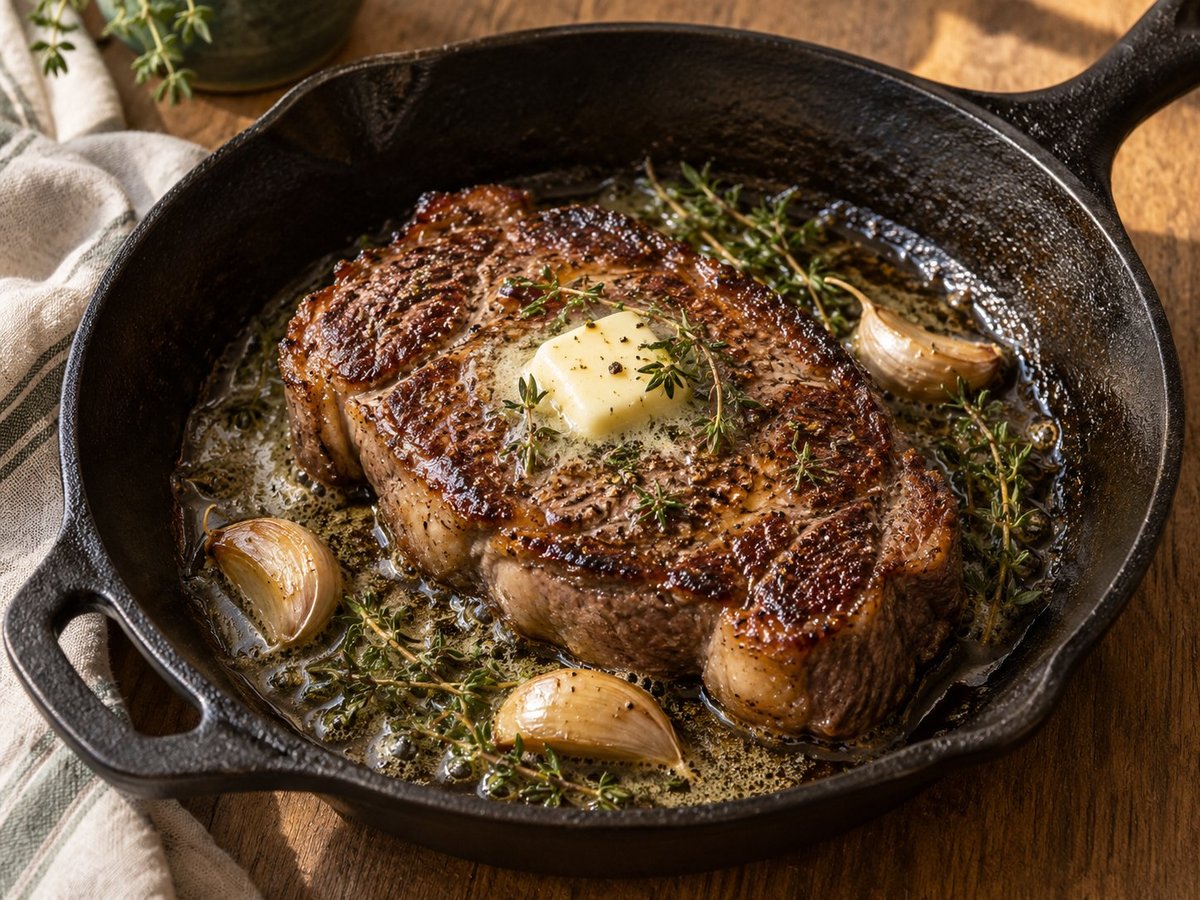
- Cut
- Ribeye
- Difficulty
- Easy
- Prep
- 10 min
- Cook
- 12 min
- Total
- 22 min
- Serves
- 2
- Season
- Year-Round
- Method
- Cast Iron
Ingredients
- 1 Alaron Farms ribeye (about 1–1¼ lb), 1½ in thick
- 1½ tsp kosher salt, plus more to taste
- ½ tsp coarse black pepper
- 1 tbsp high-smoke-point cooking oil (avocado, grapeseed or refined canola)
- 3 tbsp unsalted butter
- 3 cloves garlic, lightly crushed and left in the skin
- 3 sprigs fresh thyme or rosemary
What You'll Need
- 10- or 12-inch cast-iron skillet (stainless steel works too)
- Instant-read meat thermometer
- Wire rack set over a sheet pan
- Long tongs
Before You Start
- Take the steak out of the refrigerator 30–45 minutes before cooking so the center isn't fridge-cold.
- Pat both sides completely dry with paper towel. A wet surface steams instead of searing — this is the single most common reason a home steak doesn't brown.
- Season both sides with the kosher salt and pepper. If you have time, salt it on a rack in the fridge uncovered for a few hours or overnight; the surface will dry further and the seasoning will go deeper.
Method
- 01
Heat the pan properly
Set the cast-iron skillet over medium-high heat and let it come up for 4–5 minutes. It's ready when a drop of water flicked into the pan evaporates instantly and a thin wisp of smoke rises. Add the oil and swirl to coat.
- 02
Sear the first side
Lay the steak down away from you and don't move it. Let it sit undisturbed for 2½–3 minutes to build a crust. Press it lightly with tongs for the first 10 seconds if the surface isn't making full contact.
- 03
Turn and continue
Flip once with tongs and sear the second side another 2½–3 minutes. Use tongs to hold the steak on its fat edge for 30 seconds to render the fat cap.
- 04
Add butter, garlic and herbs
Reduce the heat to medium. Add the butter, crushed garlic and herb sprigs. As the butter foams, tilt the pan slightly and spoon it repeatedly over the steak for 1½–2 minutes — this is what finishes the crust and carries the herb flavor into the meat.
- 05
Check the temperature and pull it
Insert the thermometer through the side into the thickest part, avoiding bone and fat. Pull the steak when it reads about 5°F below where you want to finish; it will climb during the rest. For reference: roughly 120–125°F for rare, 130–135°F for medium-rare, 140–145°F for medium. Use the USDA's current minimum internal temperature guidance for food-safety decisions (see Kitchen Notes).
- 06
Rest
Move the steak to a wire rack over a sheet pan (not a plate — you don't want it sitting in its own juices) and rest it 5–8 minutes for a steak this size. Spoon the warm pan butter over it once more.
- 07
Slice and serve
Slice against the grain into ½-inch slices, or serve it whole on the board with the rested juices poured back over the top.
Kitchen Notes
- Food safety: USDA guidance lists a minimum internal temperature of 145°F for beef steaks, roasts and chops, followed by a 3-minute rest. The doneness temperatures above (120–135°F) are culinary preferences, not food-safety minimums — whole-muscle steak cooked to medium-rare is a long-standing restaurant standard, and the decision is yours.
- Dry surface = brown crust. If you do nothing else, pat the steak dry and salt it ahead.
- A thicker steak is more forgiving than a thin one. If your ribeye is under an inch, cut the sear time to about 2 minutes per side.
- Don't crowd the pan. Two steaks in a 10-inch skillet will steam each other.
How to Serve It
- Slice it over the board and serve with the pan butter poured over the top.
- Pairs well with roasted potatoes, a simple green salad, or grilled bread to catch the juices.
- Leftover slices are excellent cold the next day over arugula with a sharp vinaigrette.
Storage & Leftovers
- Refrigerate leftovers within 2 hours in a shallow, covered container and use within 3–4 days.
- Reheat gently — a low oven or a quick sear — rather than in a microwave, which will push it past medium.
- Cooked beef can be frozen for up to 2–3 months; thaw in the refrigerator, never on the counter.
Using Another Cut?
New York Strip
Works identically — same pan, same times, still pull early and rest.
Top Sirloin
Leaner and less forgiving; cut the cook time slightly and don't take it past medium.
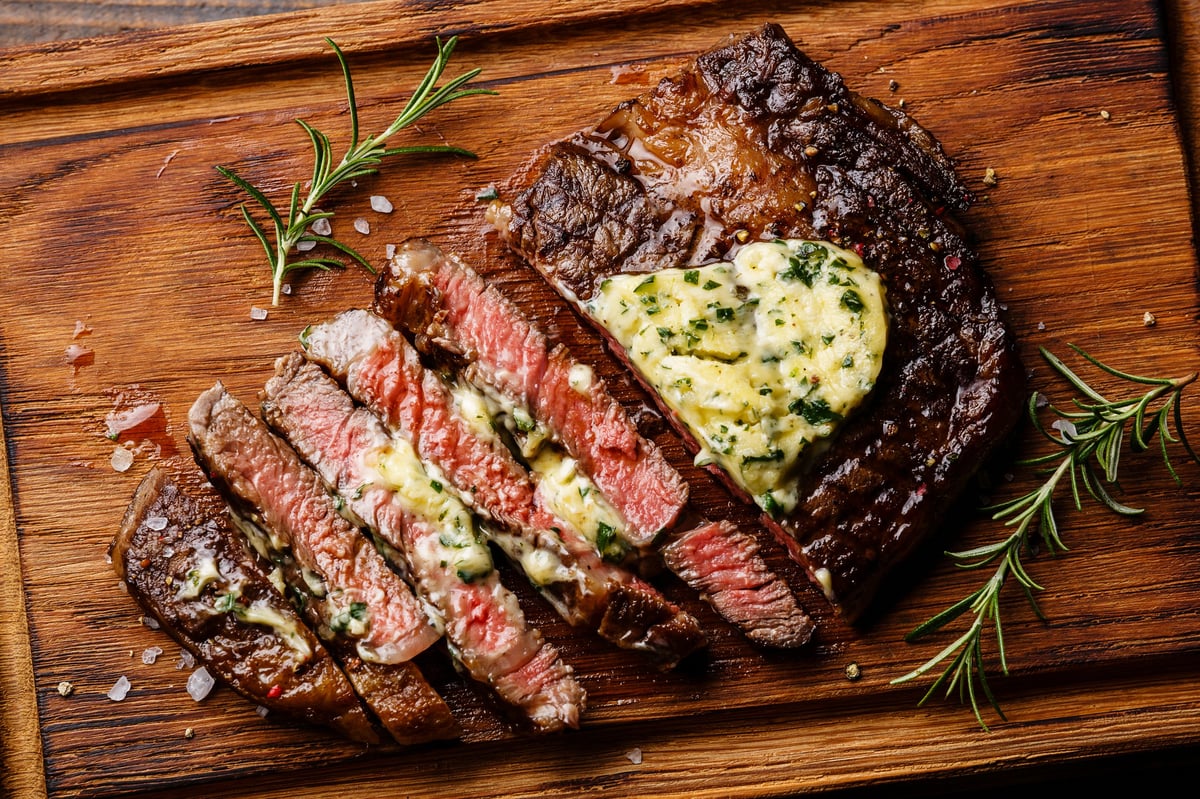
Ribeye, delivered from the farm.
Choose the Alaron Farms box that fits your household, set your delivery rhythm and tell us how your family likes to cook.